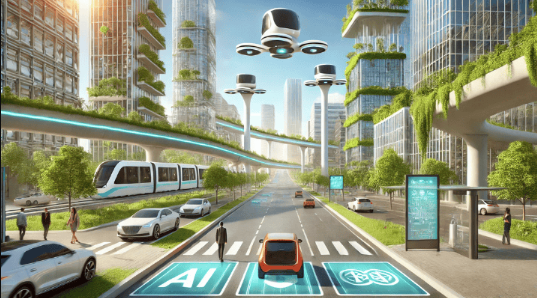
Technology is reshaping urban development by introducing smart infrastructure and data-driven methodologies. These advancements optimize resource management, enhance energy efficiency, and facilitate more effective transportation networks. As cities grapple with challenges like climate change and population growth, the integration of these technologies becomes increasingly critical. This ongoing evolution raises questions about the balance between innovation and community engagement, prompting a closer examination of how these elements interact to redefine urban life.
Smart Infrastructure and Its Impact on Urban Life
Smart infrastructure serves as the backbone of modern urban development, integrating advanced technologies to enhance the efficiency and sustainability of city systems.
By leveraging smart utilities and digital connectivity, cities can optimize resource management, reduce waste, and improve overall quality of life.
These innovations empower citizens by fostering transparency, encouraging participatory governance, and allowing for greater adaptability in an ever-evolving urban landscape.
Sustainable Energy Solutions for Cities
How can cities effectively transition to sustainable energy solutions that meet growing demands?
By integrating renewable energy sources, such as solar and wind, urban centers can reduce their carbon footprint.
Additionally, promoting urban agriculture allows cities to harness local resources for energy production and food supply.
This dual approach not only enhances energy resilience but also supports community self-sufficiency, fostering a sustainable urban ecosystem.
Data-Driven Planning and Decision Making
An increasing number of cities are leveraging data-driven planning and decision-making to enhance urban development strategies.
Utilizing geospatial analysis, urban planners can visualize spatial relationships and assess land-use patterns effectively. Furthermore, predictive modeling allows cities to forecast future trends, optimizing resource allocation and infrastructure investments.
This analytical approach fosters informed decision-making, ultimately promoting sustainable growth and enhancing the quality of urban life.
See also: The Role of Technology in Startups
Innovative Transportation Systems for Urban Mobility
Data-driven planning lays a foundation for the development of innovative transportation systems that enhance urban mobility.
Autonomous vehicles promise to revolutionize urban transport by reducing congestion and emissions, while bike sharing programs promote sustainable commuting options.
Together, these technologies foster a more interconnected and liberated urban environment, enabling citizens to navigate their cities efficiently while prioritizing personal choice and environmental responsibility.
Conclusion
In conclusion, technology serves as the backbone of modern urban development, weaving together smart infrastructure, sustainable energy, and data analytics to create vibrant cities. Like a conductor orchestrating a symphony, it harmonizes various elements of urban life, fostering efficiency and resilience. As cities continue to evolve, the integration of innovative transportation systems and participatory governance will empower residents, ensuring that future urban landscapes are not only functional but also enriching environments that elevate the human experience.